PROTAGION
  • Proteges
    • Now What?
    • Career Support Guide
    • Career Goals >
      • Promotion / Raise
      • New Skills
      • Further Qualifications
      • Moving Countries
      • Switching: Consult/Contract/Startup
      • Transition: Specialism/Profession
      • Managing a Business
      • Portfolio Career
      • Purpose & Meaning
      • CPD
      • (Conference 1-5 Mar '21)
    • Example Professions >
      • Accounting
      • Actuarial
      • Asset & Investment Management
      • Risk Management
      • And more... >
        • Talent Management for Professionals
    • Our Services
    • Courses
  • Mentors
    • Encore Mentor
    • Featured Subset >
      • Anne - Australia
      • Boniswa - S Africa
      • Bradley - UK
      • Cherise - Nigeria
      • Hafsa - S Africa
      • Lee - Hong Kong
      • Lusani - S Africa
      • Margaret - S Africa
      • Michael - S Africa
      • Natasha - UK
      • Nikki - UK
      • Sumit - India
      • Trevor - UK
      • And More on our Protege Platform...
  • Subscribe
  • Platform Login
    • Login
    • Sign Up: Free
  • Stories
    • Our Stories & Articles
    • Our Principles
    • Books
We help professionals achieve their career goals
OUR STORIES
Over 150 career-related articles and counting... Scroll down to read
NEED MORE CAREER SUPPORT? Our professional mentors & coaches are here to help
Join our in-a-group facilitated sessions & explore your career questions with us​
SUBSCRIBE TO JOIN OUR
IN-A-GROUP SESSIONS

Thoughts from a Talent Analytics leader

3/7/2023

0 Comments

 
Data scientists (and other technical analysts) tend to be mathematically & statistically trained, confident in our numerical and programming skillsets and our abilities to solve problems. 
Sounds great, yes, but is that enough? 

Pete Kropman, at the time Head of Quant Talent Analytics for a bank, shared his views on the 'EXPLORE - The Future' podcast, discussing (among other topics): 
  • typical gaps technical people have, 
  • the importance of time and learning by doing, and 
  • the extra skills managers need. 

While real business problems benefit a lot from approaching them with a data-driven and scientific mindset, other things are important too: 
  1. EQ and communication skills
  2. business understanding and a commercial perspective - domain knowledge helps 
  3. an execution and implementation mindset 

Pete says that these are typically not well developed when a new data scientist starts, and require deliberate attention. "It's great to be able to access all those Python libraries and build an advanced model with a few lines of code, it's another thing to really understand what the drivers of profitability in a certain business unit are, and how to connect the dots between [our] technical work and what's actually going to make a difference to driving the business forward." He warns against building sophisticated predictive models that aren't implemented realistically for the needs of operational people, sales people etc. Especially in a highly-regulated environment like a large bank. Instead, he recommends focusing on "learn[ing a] mindset of bias to execution and delivery". Understanding our users' needs is particularly important i.e. empathy. 

Beware of disillusionment setting in though (as we realise we won't be spending every day building models and generating insights). Pete points to realities like:
  • sourcing and cleaning data, 
  • learning how to communicate our work really well, 
  • navigating approval committees and politics, 
  • ironing out deployment issues with other departments, and more...

There are no real shortcuts: it will be a fairly long and sometimes frustrating process to push through to really understanding the business and learning how to get stuff done. Practice is required. We should prepare ourselves for the learning struggle, and call on others for help. Tough yes, but doable - others have overcome similar challenges before!

And, when we manage others, there are additional skills needed there: motivating our team, inspiring them, setting direction, managing priorities, managing workflow, and syncing between different stakeholders are examples Pete gives. Management and leadership are things we can't learn simply from reading a book or attending a course - generally we only get better by doing it i.e. trying and failing and learning by doing. 

Thank you Pete for sharing your experiences of leading analytical talent, and for forewarning us that it won't all be plain sailing. Reminds me a little of Ray Dalio's mantra to 'embrace reality'. 

A lifetime of learning lies ahead - isn't that exciting? 
0 Comments

Beyond Analytics

8/6/2023

0 Comments

 
​As technical professionals we can pride ourselves in our analytical skills - after all, they often form the foundation of our professional value-add, particularly in the earlier stages of our careers. They are important, yes, but they are not sufficient if we want to:
  • ​keep growing over our careers,
  • avoid displacement by increasingly-sophisticated automation, and
  • have a meaningful impact on the world beyond the numbers. 

The 'extra' bits are what Cole Napper describes as 'inquisition' and 'change' - more on these later. Cole is a people analytics professional, and co-host (with Scott Hines) of the Directionally Correct podcast, which I listen to given my interest in blending people/human and analytical/STEM skills. What strikes me is how aligned Cole's description is to other scientific/technical professions, including the 'actuarial control cycle' and similar cycles in data science. 

Cole explains three steps in the 'value chain of people analytics', which is really a cycle i.e. it repeats:
1) Inquisition
2) Analytics
3) Change 

He argues that the analytics portion of the value chain cycle is about to become almost completely automated with technology and generative AI. "Most of what people analytics does is analysing rows and columns of data. Pretty soon, most of that type of analysis will be highly automatable. What will people analytics professionals do then?" We could say the same about any analytics professionals! 
Most of what people analytics does is analysing rows and columns of data. Pretty soon, most of that type of analysis will be highly automatable. What will people analytics professionals do then?"
COLE NAPPER
Inquisition
'Inquisition' means asking good questions. It's analogous to the 'specify the problem' step of the actuarial control cycle (i.e. define what you're trying to answer). Cole says that the onus is on the researcher (i.e. the analytics expert) to solve the problem of induction when it comes to scientific inquiry - they must determine what business problems to tackle, what research questions to ask, and what hypotheses to test: "[inquisitors] must ask the right questions and be in-tune with the business". Ask questions, challenge assumptions, and look for new and better ways to do things, he says. That's how we help push our professions forward and drive innovation. 

Change
The other critical step, after the analysis is done is to be a 'change agent'. Sadly, analytics professionals too often stop when we have a sophisticated model or an 'answer' with decimal places. Instead, we need to push on: the 'so-what' is key i.e. what business or customer outcome is the analysis for? ​Cole argues that a people analytics function should be more than merely 'decision support' - it should be at the forefront of making real business decisions, owning the consequences, and putting change into action: "We must be the change agents. And, we must acquire the power to bring about that change." 

What do you think about the three steps in the cycle? Which of them should we invest more of our energy into? 

I end with another quote by Cole, once again applicable across scientific/technical professions: 
"You are no longer a neutral arbiter of data. When leading people analytics, you are a stakeholder, not just a data provider. You are in the arena. The decision making arena, that is. Risk, uncertainty, accountability..." 
Thank you Cole (and Scott) for urging us to think and act beyond the numbers! ​​
0 Comments

Portability & Passion: Grace Motsi's Personal Journey

25/5/2023

4 Comments

 
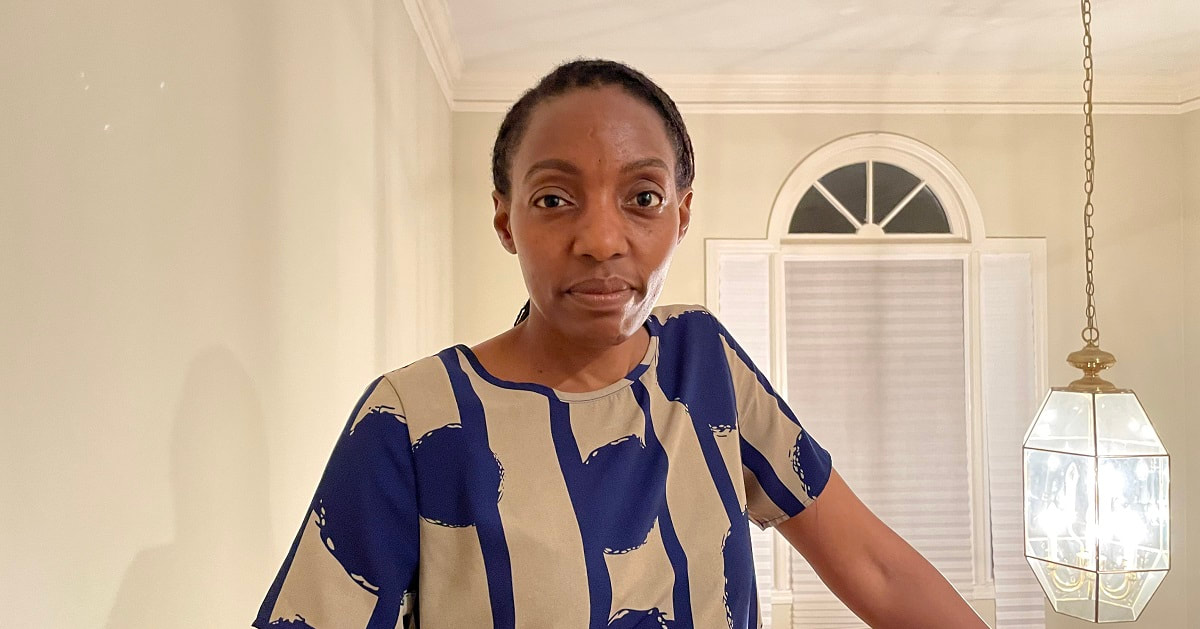
Grace Motsi is a global pensions consulting actuary, who also has a Masters in Business Administration (MBA). Originally from Zimbabwe, she’s studied and worked in a number of other countries, and now lives in Atlanta in the United States – eagle-eyed readers will note her American spelling! She writes about her studies, her career, becoming a mother, and balancing work and motherhood i.e. ‘being pulled in all directions’. Ambition, perseverance, growth, values, family, and service – here is Grace’s story: 
Grace is a mentor on the Protagion platform. To experience what we offer our proteges or arrange a mentor session with her, signup as a member:
SIGN UP NOW

​“I grew up in Zimbabwe with my three siblings – who are still today three of my favorite people in the world. I never laugh as hard (or loud!) as when I am with those three! Our parents threw all they had into us and had very high ambitions for all four of us vana... 

As a teenager in high school, I didn’t know what I wanted to be when I grew up in terms of work. What I did know was that my career had to: 
  • be different from what everybody else was doing (for the bragging rights) and 
  • offer a strong earning potential (I had seen my parents struggle to make ends meet in their pursuit for a good education for us all and I didn’t want that for me, and I also knew they didn’t want that for any of their children).  
Picture
When I had two years left of high school, a careers advisor came to our school to talk to the seniors. My class wasn’t in that meeting, but that session still changed my life! When the senior students came out from that meeting, there was some chatter about something called an “actuary”. You had to be good at mathematics (check!), it was a unique and sought-after profession (secure – check!, earning potential – check!). Apparently, there were only 12 actuaries working in Zimbabwe at the time and 10 of them were from other countries. There wasn’t even an actuarial degree offered in Zimbabwe then… I didn’t know how, but I was going to be an actuary!

Read More
4 Comments
<<Previous
Forward>>

    Follow @Protagion

    Author

    Bradley Shearer
    ​Founder of Protagion
    My Personal Journey
    I'd love to hear your stories

    SHARE YOUR
    STORY WITH ME

    Categories

    All
    Active Career Management
    Branching Out
    Connection
    Consulting
    Contracting
    Future Of Work
    Inspiration
    Leadership
    Learning
    Mentoring
    Non Executive Directors (NEDs)
    Personal Journeys
    Professions
    Psychology
    Real Life Examples
    Role Options
    Routes To The Top

    RSS Feed

"NOW WHAT?" - a common question our visitors ask...
​WE CAN HELP!
Examples of common career goals, with resources for each: promotion, new skills, further study/qualifications, moving countries, switching into consulting / contracting / startup, transition to new specialism or profession, managing a business, portfolio career, purpose & meaning, CPD, and more... 


Follow @Protagion
Home / Proteges
> ​Services
> Subscribe
> CPD
​​

​Mentors

Our Stories / Blog

Sign Up to use our System
​
​
Privacy Policy​
Career Development and Talent Management for professionals: accountants, actuaries, analysts, asset managers, bankers, CFAs, data scientists, engineers, investment managers, risk managers, and more...
Protagion currently offers services in English, although some of our mentors & coaches speak other languages too. ​Please email us if you have any questions.
Picture

​© 2017-2026 PROTAGION LIMITED (10721032) is a company registered in England and Wales.
Registered Address: 128 City Road, London, United Kingdom, EC1V 2NX

Photos from Pjposullivan1, paul.horsefield, flazingo_photos, wuestenigel (CC BY 2.0), SURF&ROCK (Miguel Navaza), symphony of love, timo_w2s, ksunderman, Pjposullivan1, www.ilkkajukarainen.fi, Official U.S. Navy Imagery, Pjposullivan1, Kuruman, Pricenfees, Tennis-Bargains.com, wuestenigel
  • Proteges
    • Now What?
    • Career Support Guide
    • Career Goals >
      • Promotion / Raise
      • New Skills
      • Further Qualifications
      • Moving Countries
      • Switching: Consult/Contract/Startup
      • Transition: Specialism/Profession
      • Managing a Business
      • Portfolio Career
      • Purpose & Meaning
      • CPD
      • (Conference 1-5 Mar '21)
    • Example Professions >
      • Accounting
      • Actuarial
      • Asset & Investment Management
      • Risk Management
      • And more... >
        • Talent Management for Professionals
    • Our Services
    • Courses
  • Mentors
    • Encore Mentor
    • Featured Subset >
      • Anne - Australia
      • Boniswa - S Africa
      • Bradley - UK
      • Cherise - Nigeria
      • Hafsa - S Africa
      • Lee - Hong Kong
      • Lusani - S Africa
      • Margaret - S Africa
      • Michael - S Africa
      • Natasha - UK
      • Nikki - UK
      • Sumit - India
      • Trevor - UK
      • And More on our Protege Platform...
  • Subscribe
  • Platform Login
    • Login
    • Sign Up: Free
  • Stories
    • Our Stories & Articles
    • Our Principles
    • Books